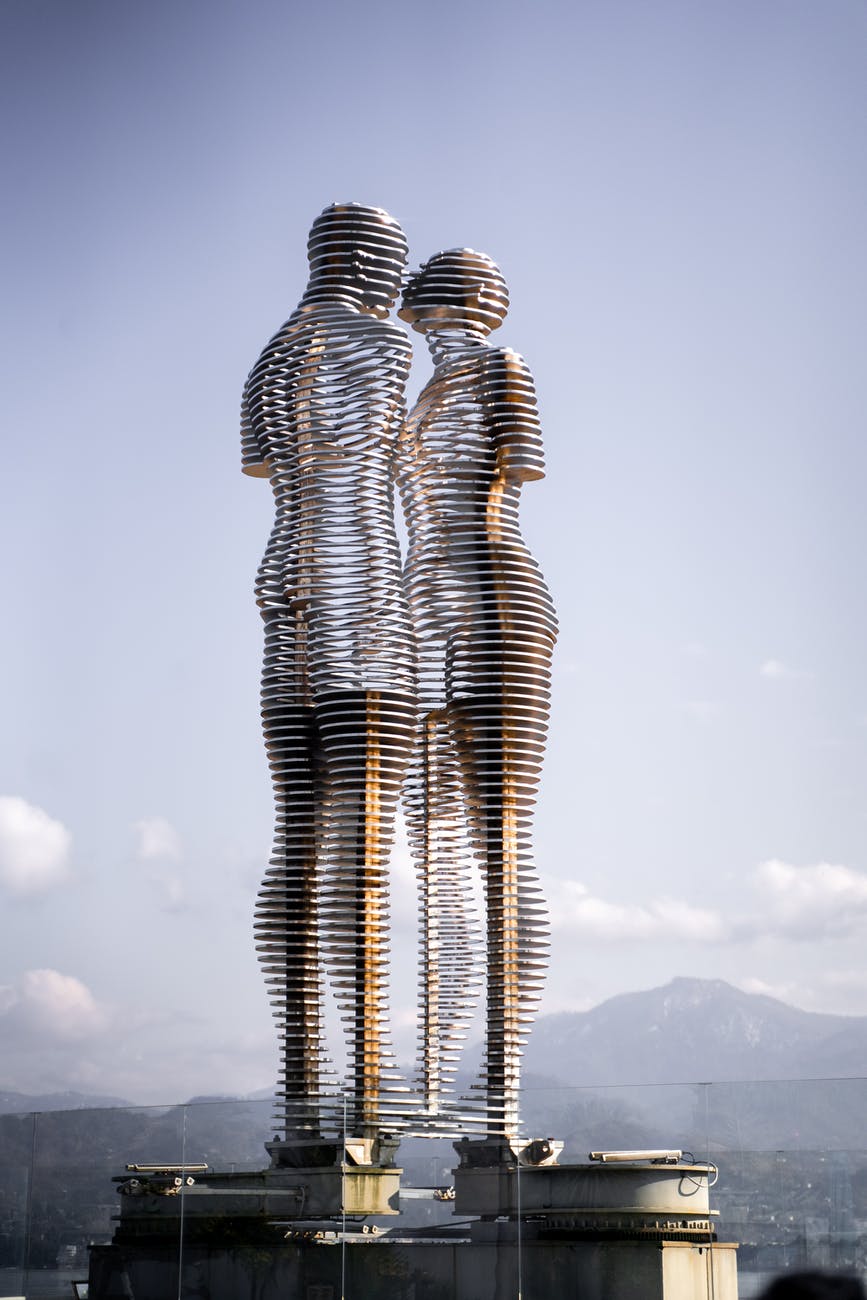
Now we come to the creation of mankind or, as we have learned, the “making”, the hand crafted fashioning of mankind.
All of our greatest, most foundational questions about our purpose and our existence are rooted in this moment. Who are we? Why were we created? What is our purpose? Why did He make us in His image? What does it mean to have “dominion” over the Earth and everything in it?
These questions are ones that philosophers have puzzled over without any basis in this backstory and they haven’t been able to find an answer. Theologians that enjoyed the benefit of having this creation narrative have discussed it, argued over it, destroyed relationships and built whole denominations of division over it. I am simply a guy with a Bible, but come closer and see what I see through the glass darkly…
In verse 26 of the first chapter of Genesis, God says “Let us make man in Our image, after our likeness.” My first thought upon reading this was that God was just repeating himself for emphasis because that is a thing that God does throughout the Bible. If something is really important that He wants us to get the Lord says it twice or three times. (And now I have to consider doing a study on the repetitions of God. Thanks, me. Like I need more work. ;))
In this case, He isn’t saying the same thing. It’s not just “Let’s make man in our image. No seriously. Let’s make man in our image.” The words used here are two different words with slightly different shades of meaning.
The first word used, “tselem” is a word that shocked me from the moment I read through its various entries. Throughout the rest of the Hebrew Bible “tselem” is the word used for idols. Usually in discussions on this topic people are a lot more comfortable with the term “image bearers” and I don’t blame them. My brain automatically deflected to that much more palatable interpretation, but I chose to explore what it would mean if we were God’s “idols”, His “Graven Images”. Let’s consider what it means for a man or a culture to make an idol.
Imagine a man in the ancient who wants supernatural assistance with something. Let’s say, he wants many children and it just doesn’t seem to be happening. He takes some clay and in order to call down the power of fertility into his situation the man creates a figure that is busty and curvy hipped; all things that indicate fertility. He wants to create a channel through which that deity or abstract concept can flow through, a conduit for the energy of blessing. This transaction, in this sense, is a two way street. He sacrifices something of value in hopes that the power will flow into his life bringing good things.
Here is why I believe that God referring to us as “idols” makes more sense that simply “image bearers”.
You may have heard that everything to do with God’s kingdom is upside down compared to how humans think of it. This concept is now exception. Before idolatry is even a thing, He flips it. Instead of some ancient human in need, God is a divine being with not only now needs but an infinite capacity to give. He chooses, in these verses, to make and image for Himself as a way to bless the Earth, to do good for the Earth, and bless all of His creation (including other humans) by channeling His power through His “idol” and affect change; affect Shalom.
From the beginning of God’s plan for our existence, He chose to declare that we would have a sacred, truly sacred, responsibility. We are His “icons”, His “idols”, His channels for His power and Spirit, His will on this earth. This is why “image bearers” simply doesn’t cut it. We don’t just look like Him. We don’t just seem like Him. He uses us to bring about life and peace and well being to those around us. His Spirit in us working through us to bring about His purpose of bringing blessing into people’s situations is precisely the point.
Consider the figures of Biblical and Church history that have shown the power of God most fully. A stuttering man, a child with a sling, exiles who refused to bow the knee and violate God’s law, a terrified man in a winepress, kings of a crumbling society, a hated tax collector, a fisherman with no religious training, a doubting disciple, and a aged man in prison on an island who merely looked up and wrote what he saw, just to name a few. All these men as idols did was say “Yes”. They made the choice to be the very thing their God made them to be, representatives and channels for His healing, Shalom inducing power. And they changed the world.
One of the most horrific things is that this idol has a choice. It can actively choose to not release that life-giving power. In fact it can instead choose to not just say “no” but warp and twist things by doing the opposite of what the God of the idol wishes. It can withhold and say “no”, and it can do the exact opposite and produce sickness and destruction. It can “bless and curse with the same mouth”, as James says in his letter.
This was God’s intention from the beginning. This was His great desire for the Mankind He was about to create, that they would look and act like Him, that they would be worthy representatives, image bearers, and icons. This is our purpose. This is two facts that were laid in the “deep magic” at the foundation of the universe is the answer to our great, frustrated, screaming “WHY?!”. We are only at peace when we choose this path, this existence, this way. To do nothing when He calls breeds lostness and depression. To do the opposite of His desire leads to destruction. To be what He made us to be, within that framework lies our Shalom, not just for the individual but for all humanity and the earth and creation beyond us.
And then He declares that we are to be given dominion. We have every tool at our disposal to rule rightly. We have every tool at our disposal to be a wicked tyrant. The choice is ours. The blessing, the curse, the healing, the destruction, the unity or the division.
But was does it mean to have dominion over all the things that God created and why should mankind have it? Well, we will have to talk about that next time.
(Once again, as always and ever, if you have made it this far and have enjoyed the article I ask that you would consider liking, commenting, subscribing, or sharing. Naturally I’d be thrilled if you do all four, but even if you don’t you’re still cool and I still like you. Thank you for reading at all. Pax!)


 Finding Narnia
Leave a comment