And so, the LORD God drives out the man and installs a pair of Cherubim with flaming swords that turned every which-way to guard the way to the Tree of Life.
I’ve been chuckling a little to myself all morning as I’ve imagined this scene given the popular conception of cherubim/cherubs. The image of two little, fat baby angels with tiny wings wielding these flaming swords as the last line of defense for the Tree of Life is certainly amusing. It doesn’t take long for me to check my amusement as I consider this event from the perspective of Adam and Eve.
The pair had never known life apart from the Garden. They had never known life apart from the presence of God. Now they were driven out personally by the Divine into the East of Eden, into an area they did not know, and barred from returning by angels armed with fire.
With every step the grief in their hearts must have been immense, wracking their bodies with sobs, clawing at their faces in frustration, pounding at the ground in bereft, internally focused rage. It’s easy to empathize with a feeling of fear of the unknown as they stepped out, but I’m willing to be that didn’t come until later.
How do you ever get over losing Eden and knowing it was all your fault?
God left no doubt that this was the case. He cut through all of the accusations and told each that they didn’t get to blame the other. The man was just as responsible as the woman. Adam could not hold Eve in contempt anymore than Eve could hold Adam or the Serpent. They each broke the world. They each were undeniably at fault in their own way and now they had lost everything.
Imagine the joy and comfort you enjoy everyday in your home and with your family. Now imagine it all gone in a moment by fire. You are the only one left. It was your negligence that started the blaze, and no one is coming to put out the flames. That may be a fraction of what they felt.
Suddenly everything is so much harder. They had to learn how to make shelter, learn how to feed themselves, and the importance of finding water to slake their thirst. They were no longer protected from the elements, protected from environmental hardship. Where would they get food?
What was it like the first time Adam killed an animal out of hunger and had to spill its blood and eat its flesh; so aware that he was destroying life, a living breathing thing God created. To kill for his own survival. Did he spit out the bloody raw meat at the first taste? Did he mourn the killing? How many times did he scream to the sky in frustration as the difficulty of life outside the Garden remind him again and again of what they lost and how it was all his fault? It is no wonder that in their grief, as they tried to bring food from the ground or try to make fire, that they took comfort in each others arms and they made love.
There she was, Eve, still God’s gift to Adam even in that desolate place. Still his helper, still his comfort, still bone of his bone and flesh of his flesh. In the their physical unity they could still make a little bit of Eden, a little bit of Paradise that they had known. Some taste of when the world was full of joy, flourishing, and abundant for them…if only for a short while.
It’s interesting to note that Adam is his name but it is not a proper noun, as such. It sounds like the Hebrew for “earth” or “red” which would indicate the soil as well. God made Adam from the dirt and so he is. Everything of Adam was tied to the ground. He was made from the dirt, created and given the charge to care for the grounds of God’s Garden, given dominion over all the earth, and his “curse” is that the ground will be harder to till. God specifically reminds him that from the earth he came and to it he shall return. His substance and his purpose are all tied together in his name. Adam.
It would make sense then that the woman would be named something close the Hebrew for “rib” or “from man”. That is her substance. If not that then her name should be related to her purpose, which God declared was to be as a “helper”. Instead Adam gives her a different name entirely. “Eve” which has nothing to do with her substance. “Life-giver” is what he names her.
It is only after the “curses” that Adam has this realization of Eve, that she is the Life-Giver, and will be the “Mother-of-all” living. He marks her out as fundamentally different than himself, with a different purpose. It may very well be that he had no idea that she could or would bear children before God brought up the pains of childbirth being increased. What and interesting moment, if true, that would be. Here they are having just sinned, their lives about to be changed for the worse (though all things work together for the good, etc), and God brings up that the woman will make other humans. Grief and joy in the same moment. Despair and hope intertwined. Sin answered immediately with the promise of redemption and salvation.
Adam names her an amazing thing because he understands that she is an amazing thing, capable of an amazing thing, and different from himself. It occurs to me that she is called “life-giver”. There’s something very special about that. Before Eve, Adam only understood life as being given from one other being; God. He was aware that it was God who breathed into the lump of clay that he was and it was the only reason he was anything more than his substance. It would make sense if he named her “Mother of All” after she first gave birth, but he does it before.
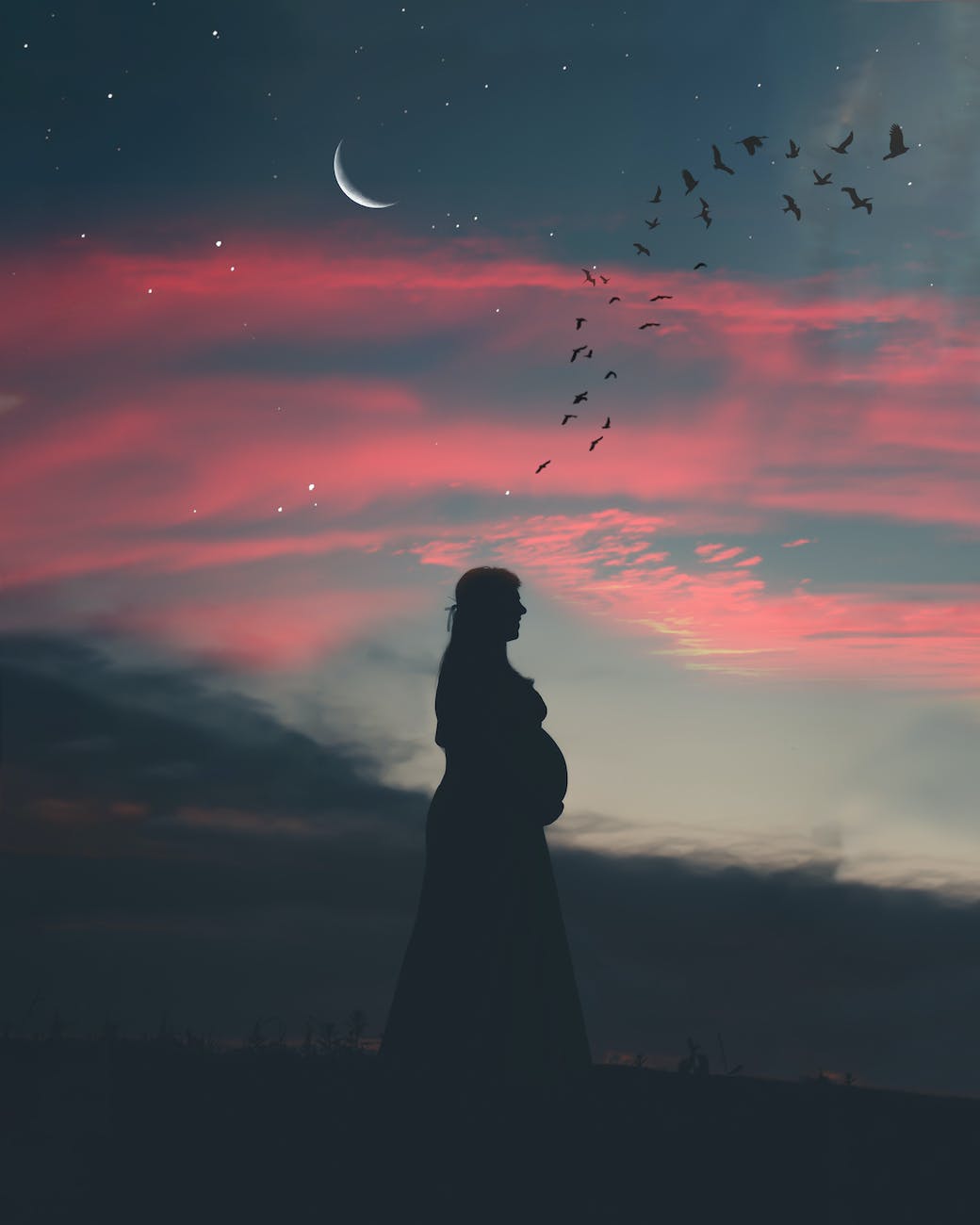
What was Eve’s time of pregnancy like for them as they worked to find shelter, food, and water, as they scrambled to make something of a life out of the harsh world around them. As her belly grew bigger, did Eve know what was happening to her? Had God given them a “birds and the bees” talk before they left the garden? As she grew bigger how much anxiety did they each have about what was going on? Did she think she was diseased? Did Adam wonder if she was going to die?
There seems to be some evidence that God wasn’t completely apart from them. He comes and talks to Cain, Noah, and later in person to Abraham, so perhaps He was there for them to guide them through some things. There’s even the peculiar phrasing of Cain’s name origin in 4:1, “I have gotten a man with the help of the LORD”. The straight reading, that she was amazed at having had a boy child, could absolutely be true. But the language here also allows us to entertain the possibility that He literally helped. God as a sort of divine midwife? There’s an interesting thought.
Imagine that first birth. The pain, the effort, the panic, the anxiety. And then out comes a child, the first child ever with some strange rope connecting him to its mother. It’s not breathing. The baby is writhing and squirming, covered in this weird goo. It’s not breathing. Did they smack it on the back? Or did either Adam or Eve recognize that it needed the breath of life and give Cain theirs to clear the blockage?
I’m certain that first wailing cry was joyfully received along with everything that naturally would come after. The first natural born human feeding, smiling, sleeping, throwing up, cooing, giggling, etc. And then later there was a second child, a second blessing of life, another boy.
We know why Adam is named Adam, Eve is named Eve, and Cain is named Cain. The scriptures tell us right there in black and white. Abel’s name origin, however, is not explained. It’s my contention that we may never know what his actual name at birth was.
Abel, in the Hebrew, means “vanity” as in the way the writer of Ecclesiastes would later mean it as “a vapor” or dew on the ground that is there one moment and then disappears. Certain rivers were given the same word in their names to indicate their swiftness in passing.
And so it was for the very first of them to die; the first victim of murder.


 Finding Narnia
Leave a comment