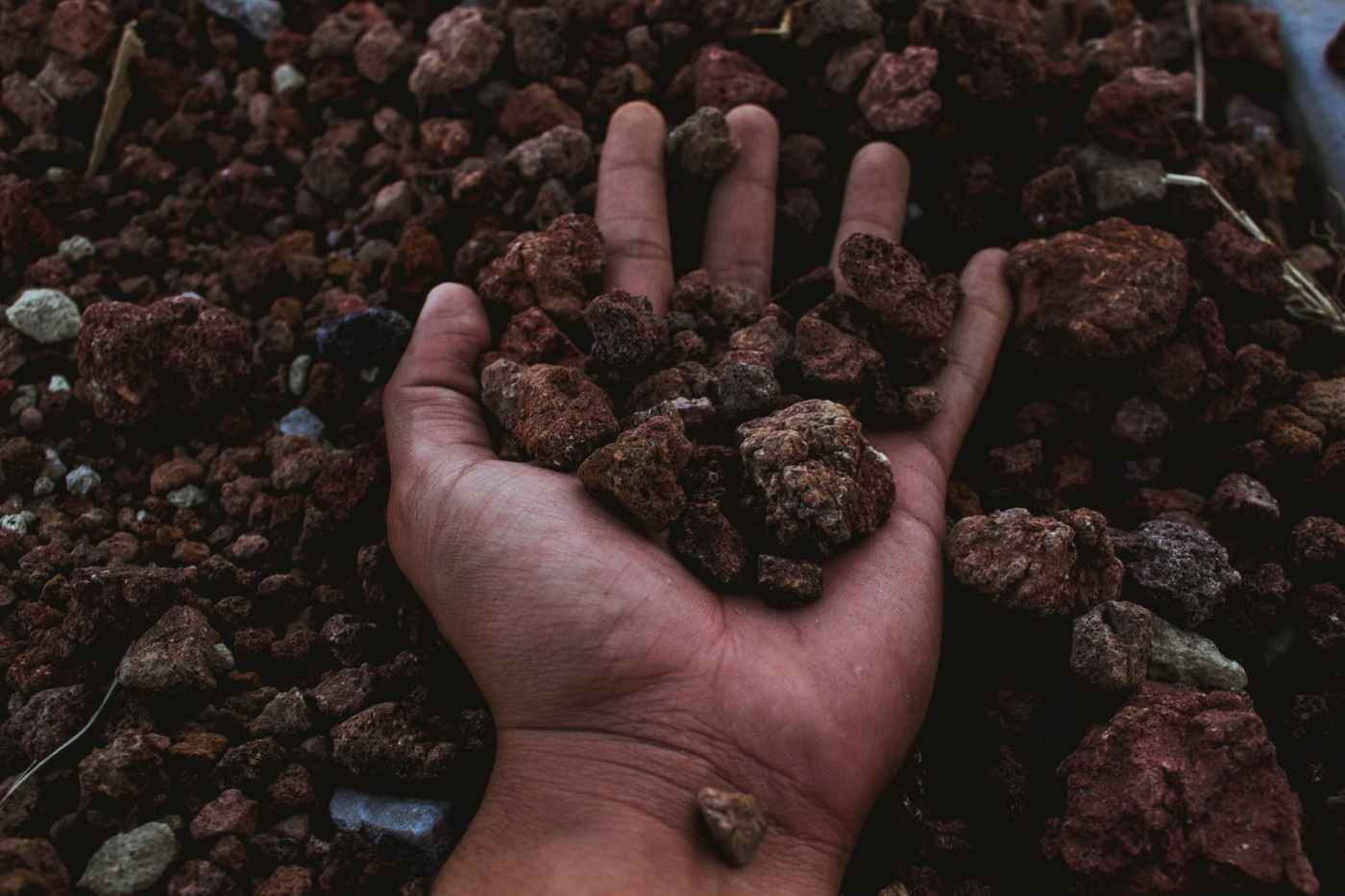
The murder done and the body presumably in the ground, Cain walks away.
I’ve often childishly imagined Cain as sociopath. In my mind he clubbed Abel over the head, and buried him with out a regret, without grief. He was evil and sin incarnate in my little head as I watched a rage faced paper cutout leap across the flannel-graph to pounce on his much smaller little brother. It’s weird now that I think back on it. Abel was always blonde and dressed in white whereas Cain was dressed in rough looking clothing, somewhat tanner, and had brown curly hair.
Ultimately Cain was a victim of the same forces that move us, the same force that encourages us to react rather than ruminate, to seek hot blooded “justice”, revenge for some perceived slight. Who among us hasn’t lost their cool and said something they didn’t mean but too late realized the damage was done? Who hasn’t struck a child in the heat of anger and felt nothing but cold remorse and shame afterward? You knew you were guilty, and there was nothing you could really do to take it back, to make it right, or make it all better.
We’ve all done something like that. We’ve all had a moment where we made a mistake we will never recover from; a mistake for which there was a time marked as before that moment and after that moment as surely as if a monument was planted there.
I don’t believe Cain was unaffected. I don’t assume he was a sociopath anymore.
Why?
Because I personal know something of what that moment may have beenlike. I think he was just like you and me, seeking to please God with the best of intentions. Something slipped, he made a mistake and he felt shamed. He didn’t have his priorities right and didn’t understand his identity in God. His value was totally in what he could present to the LORD.
We quite naturally take pride in our occupation and the fruits of our labor. All too often we wrap our identity in those things. We act like that is what makes us valuable, and when it is attacked, when it begins to slip and others call us on it, we feel shame and we lash out. We sometimes act as we never ever would have believer ourselves otherwise capable.
I see Cain weeping; snot and tears running down his face as he buries his brother. He’s unsure what to do, but tries to hide the body in the dirt. He’s both grieving and understanding that he needs to run. The death will be answered. What he wouldn’t give to hear his little brother gasp back to life even then as he poured dirt onto the body. Death had never touched them before. It was a thing for animals and they were not the same as those creatures.
No sudden intake of breath. No gasp came. Abel wasn’t sleeping. It was all truly true, and it wasn’t an accident. He committed the first murder. Imagine. They didn’t even have a name for it because it hadn’t happened before. This was something wholly new in the world and wholly evil. And I imagine Cain knew it.
The flight instinct took over and off he walked or ran; unwilling to face his father or mother ever again. How could he admit it to them? How could he endure what they would say? How would they look at him from now on?
The LORD appears and asks Cain, “Where is Abel your brother?”
As I’ve mentioned before, anytime the LORD asks question He already knows the answer. It is not His ignorance but His compassion at play. He is specifically creating a space where Cain can confess and then restoration can begin.
Cain replies with a phrase that we all know by heart. “I do not know; am I my brother’s keeper?” At least his parents had the decency to not lie to God. They hid, they shifted the blame, but they didn’t outright lie to him. Cain knew perfectly well where his brother was. Even as he spoke of him, Cain could probably see his brother’s dead eyes; the light the spirit having gone from them.
The word “keeper” strikes me as very interesting here. Until today I always thought he was giving a complaint many elder children do. “I don’t know. I’m not his babysitter.”
Looking into the original language I think we miss out on a subtle meaning here. He is asking the LORD if it’s his position to be his brother’s overseer, his watchman. Is he meant to keep tabs on his brother, never letting him out of his sight, pulling him back when he’s in danger or goes too far? Like…a sheep herder, perhaps?
The LORD moves to the next line of questioning. “What have you done?” This is followed by a further inducement to admission, a further reaching to get Cain to admit what he has done.
“The voice of your brother’s blood is crying to Me from the ground.” He isn’t telling Cain what crime he has committed. He has every appearance of trying to get Cain to confess, to unburden his soul and seek restoration. Despite all of this Cain remains silent.
This one sentence is so pregnant with meaning. This image is more than the sum of its parts. So much of Genesis is potently packed with information that we often are tempted to skip over it and move on. Sometimes we don’t even recognize the significance because its so short and condensed. Is this just a poetic phrase or is God actually saying something fundamentally true?
God is demonstrably moved by injustice. It’s often easy to believe that it isn’t so given how much injustice that we see around us. My eleven-year-old son just the other day admitted that the stuff he sees and hears going on in the world has caused his faith to waver slightly. If God has the power to just make things perfect, to prevent bad things from happening to stop people’s pain…then why doesn’t He do it? Isn’t that something a loving God would do? Isn’t that something an all-powerful being would do? It’s one of the fundamental questions that humans throughout the ages have asked. Easy sounding platitudes have been thrown at the problem for a very long time to no effect.
Why didn’t God stop Adam and Eve? When they committed the sin, why didn’t God just scrap the whole thing and start over? Why didn’t he say, “You know what guys…no harm, no foul, it’s just a piece of fruit. Keep going. Don’t worry about it,”?
Why didn’t God step in between Cain and Abel before it got too hot.
Except that He did.
I’ve mentioned before here that one of the most terrifying things about God…is that He respects our choices. He allows us to make a terrible choice and live with the consequences. Even when we pray for His intervention afterwards, He never wipes the slate totally clean. He takes away the spiritual consequences of sin, but not the consequences of the action itself.
The murderer on death row still killed a man though his soul may now be as white as snow. The wife and children still are husband and fatherless and will bear that pain all of their lives. The scriptures tell us that “all things work together for the good of those who love God and are called according to His purpose”.
All things work together for the good of…but that doesn’t mean that the things working together are “good” in and of themselves. Only that in the end they will be used in such a way as will result in the Good. And, as we have mentioned before, God’s definition of the Good is very, very different than ours.
And to be clear, evil is evil. Bad is bad. None of those are ever Good nor are they of God.
The LORD, however, specializes is taking what the Enemy meant for evil and turning it into something for Gooder than anyone else could ever make it. We are talking about, of course, a God who takes the horrible situations in our lives, the great weaknesses and mistakes that the Enemy would intend to destroy us and keep us down with…and turns it into a testimony that provides glorious hope and grace for others. If…we love God. If…we repent. If…we follow Him.
And Cain…does not.
As always, if the above made you think, feel blessed, or feel encouraged please consider the perennial plea of someone who puts their work on the internet for free. “Please like, share, comment, and subscribe”. It’s the best applause or “thank you” I can receive given that I this blog is not monetized. Thank you for reading.


 Finding Narnia
I recalled my mother mentioning your blog or a project you were working on, and I was curious to know what writing you were up to, considering your wonderful story from last Christmas. Your conception of Cain in a despondent state of grief following the murder is one I never considered, and it adds a new layer of humanity to the narrative. Excellent, as always. I’ll have to reach out to you about Biblical languages and the classics after I graduate.
– Rebecca :))
I’m so glad you checked up on me, Cousin. 🙂 I very much look forward to that discussion, although I know a LOT more about The Classics than biblical languages. The pastor of our church is going to be teaching me Biblical Hebrew starting in January, coincidentally.