At first glance, the rest of the creation narrative seems very straightforward. God said this. It was done just as He said. It was good. Morning. Evening. The next day. Simple, right?
Is there any part of the Bible that gets more skimmed over? Okay. There is Numbers and the “begats”, but the end of the Bible gets more scrutiny and discussion of the symbology than the first. Water. Land. God. Next.
When we look at water in the Revelation narrative, our minds naturally think symbolically. We miss much if we do not think similarly here. How can we so happily gloss over the beginning the Bible? It’s the setup for everything that comes afterward and deserves contemplation far more than the book of Revelation’s, “It sucks. Oh, but God wins. Time to party.” That’s a grossly reductionist view, but the end doesn’t happen without the beginning and it is just as laden with symbolic phrases if not more.
I can sense battalions of raised eyebrows rising to formation, so please allow me to clarify my position on this.
It is my belief that the Creation account, as set down in writing by Moses, is literally true. It is, as Tolkien once suggested to Lewis regarding the life, death, and resurrection of Jesus of Nazareth, “A myth that is true.” The Creation is both literally true and figuratively true.
It is symbolic, but those symbols were also actual events. How can they be both? Well, consider what Jesus said of Himself to Nicodemus in the gospel of John.
“As Moses lifted up the serpent in the wilderness, so must the Son of Man be lifted up.
The image, the symbol, that came before echoed to represent not one but two literal events.
If there is one thing that I have learned in my journey as a Christian, it is that God’s actions have multiple layers of meaning and purpose. The complexity is astounding, and the reason I began this pilgrimage through Genesis. Is there any book where God Himself is more active or does more astounding things?
So, what does all this have to do with the waters?
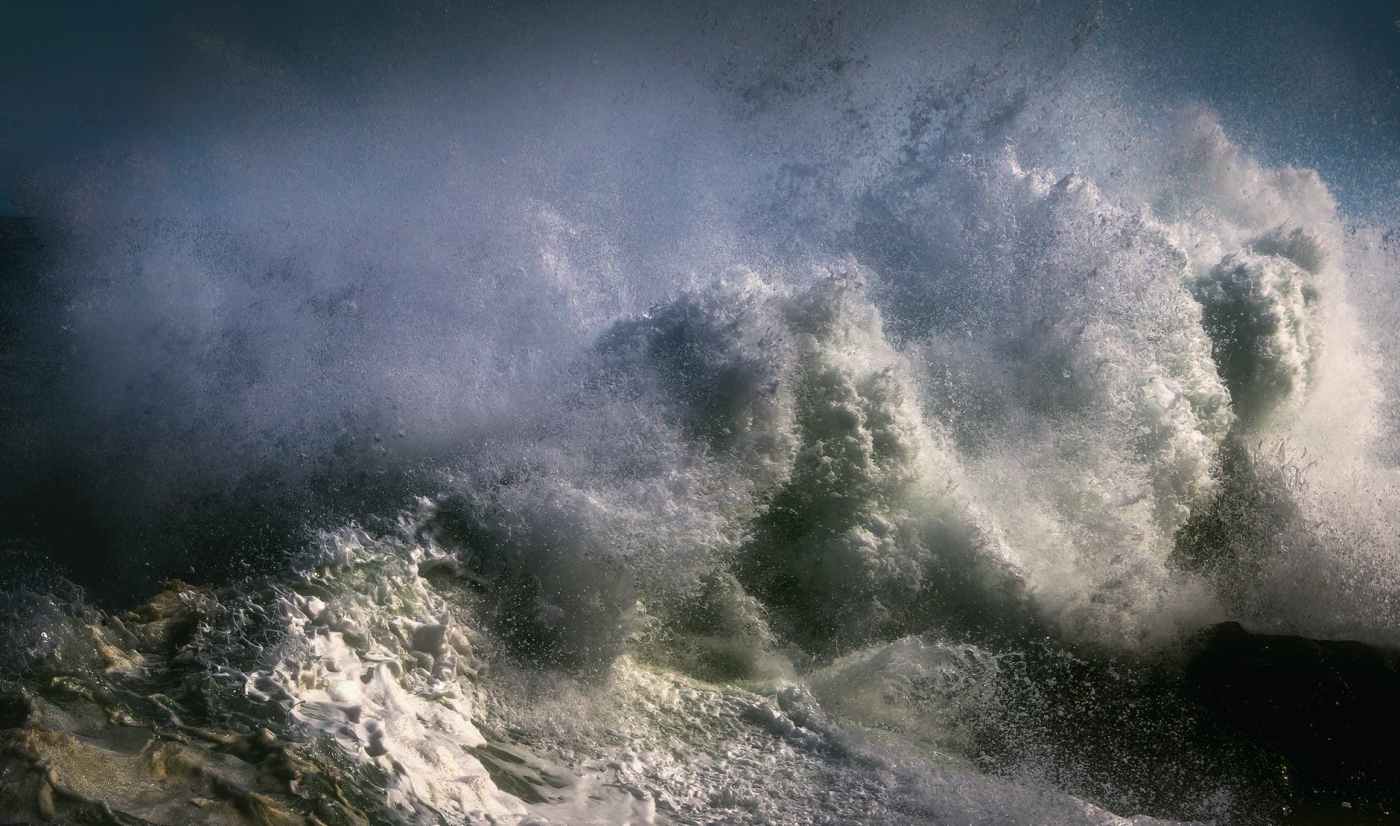
The waters, as we’ve found before, represent a lightless, lifeless chaos; oppression and disorder. In verse six, God commands that the waters are to separate. There are the “waters above”, the atmosphere (which, incidentally needs to be in place before the sun kicks off for life to begin), and the “waters below” which will become the lakes and oceans in the next section.
God calls, He specifically names, the expanse of water above “Sky”, or “Heaven”.
Isn’t it interesting that God only names a handful of things. He taught Adam what he had already declared in His language to be “Day”, “Night”, “Sky” and even Adam himself. Everything else that was created, it seems, was up to Adam to name. But not “Day”, “Night”, “Sky”, or “Adam”. Names are powerful things, as we will see later in Genesis.
God separates the waters. The day ends, but God does not look upon it as “good” yet.
So, why think anymore deeply about water?
In many ancient narratives, water is the element of chaos. Judaism is not unique in this. The difference is that outside of Judaism, the gods were born out of the chaos. It makes them. The chaos is the primordial soup or the mother from which they emerge. In some sense we could say that they are subject to it is at the thing that created them. It is above them.
For the Hebrew God, water is just another created thing that, with words, He makes subject to His will. The water, the chaos, is an element that He commands to His purpose. If we look at the use of water as a theme throughout the scriptures, it shows up in interesting places with interesting uses.
God sent the flood/chaos to purge the world of sin/chaos. He commanded the waters of the sacred Nile to turn to blood. The Red Sea itself parted to let His people through. He then had the same waters close on Pharaoh and his army. God used Chaos to defeat the enemies of His people. Could there be something, therefore, in our tradition of baptism? We are participating, symbolically, in the death, burial, and resurrection of Jesus. We leave our “old sin nature” behind us in the chaos and rise “perfected”, taking on Jesus instead.
The disciples marveled when the wind and waves obeyed Jesus to be still. They were shocked when He walked on the water. On one level, yes, that’s amazing. But on another level, how much more astounding is it that the Chaos that threatens is not only under His control with a word, but also that it is under His feet. He has used the chaos to get to where He wished to go.
We, as believers, need not fear the unknown. We need not fear even the known as it rages around us beyond our control. The chaos serves Him and is not now beyond His control.
There are two stories that stand out to me as a reminder of what astounding things God can use the waters/chaos for. The story of Namaan in the Old Testament and the story of the man beside the Pool at Bethesda in the New Testament.
The waters where used to heal.
How much should that encourage our faith; and not just for the moment but for eternity?
How can Jesus say, “Be anxious for nothing,” or “Do not be afraid”?
Perhaps it is because if we look through the Scriptures, we see a mighty God who can use the chaos we find ourselves in to purify and even heal. Only He can turn evil and disorder to make us whole.
That said, this specific day of Creation ends and God has not looked upon the separation of the waters as “good”. It is not good, useful or beneficial, until there is less water and more of another thing that lies under its depths. Below the chaos waiting to be revealed is the one other thing God specifically names.
Dry Land/ The Earth.
(As always, if you made it this far, please consider liking, subscribing, sharing, and commenting. All of those actions let me know you like what you’re reading and it isn’t all just spitting in the wind. If you are reading this, I thank you greatly for reading at all. Pax!)


 Finding Narnia
Great job, Cousin. This is the beginning of the book you were meant to write.